Polo Ralph Lauren Knitwear Guide: Fit & Styling
-
Find your place
## Define Your Purchase Task and Evaluation Boundaries for polo ralph lauren Knitwear If you plan to wear a [polo ralph lauren](https://fashion-reps.net/brand/polo-ralph-lauren) knit sweater for work or fall/winter weekends, the real question isn't first judging whether it looks authentic—it's confirming whether it suits your collar preference, layering thickness, body proportions, and usage scenario. After reading this article, you should be able to complete four actions: - Distinguish between
Editor score 4.2 / 5
Define Your Purchase Task and Evaluation Boundaries for polo ralph lauren Knitwear
If you plan to wear a polo ralph lauren knit sweater for work or fall/winter weekends, the real question isn't first judging whether it looks authentic—it's confirming whether it suits your collar preference, layering thickness, body proportions, and usage scenario.
After reading this article, you should be able to complete four actions:
- Distinguish between specifications directly confirmable on the knitwear page and image information that can only serve as clues
- Infer fit requirements based on your planned pairing with shirts, jackets, and trousers
- Record size, length, cuffs, and return/exchange conditions before ordering
- Judge whether the current product information is sufficient to support a purchase
This article does not apply to situations requiring brand authenticity verification, confirmation of official authorization, or alternative platform after-sales rules. Fashionreps pages are primarily for discovering products, viewing visible product details and QC images; orders, payments, international shipping, and after-sales are still handled by your chosen shopping agent and the relevant seller. This article uses the editorial team's information verification perspective and does not represent that the editors personally purchased, wore, or received the items.
Verify the Visible Knitwear Series and Specific Product Pages on fashion-reps
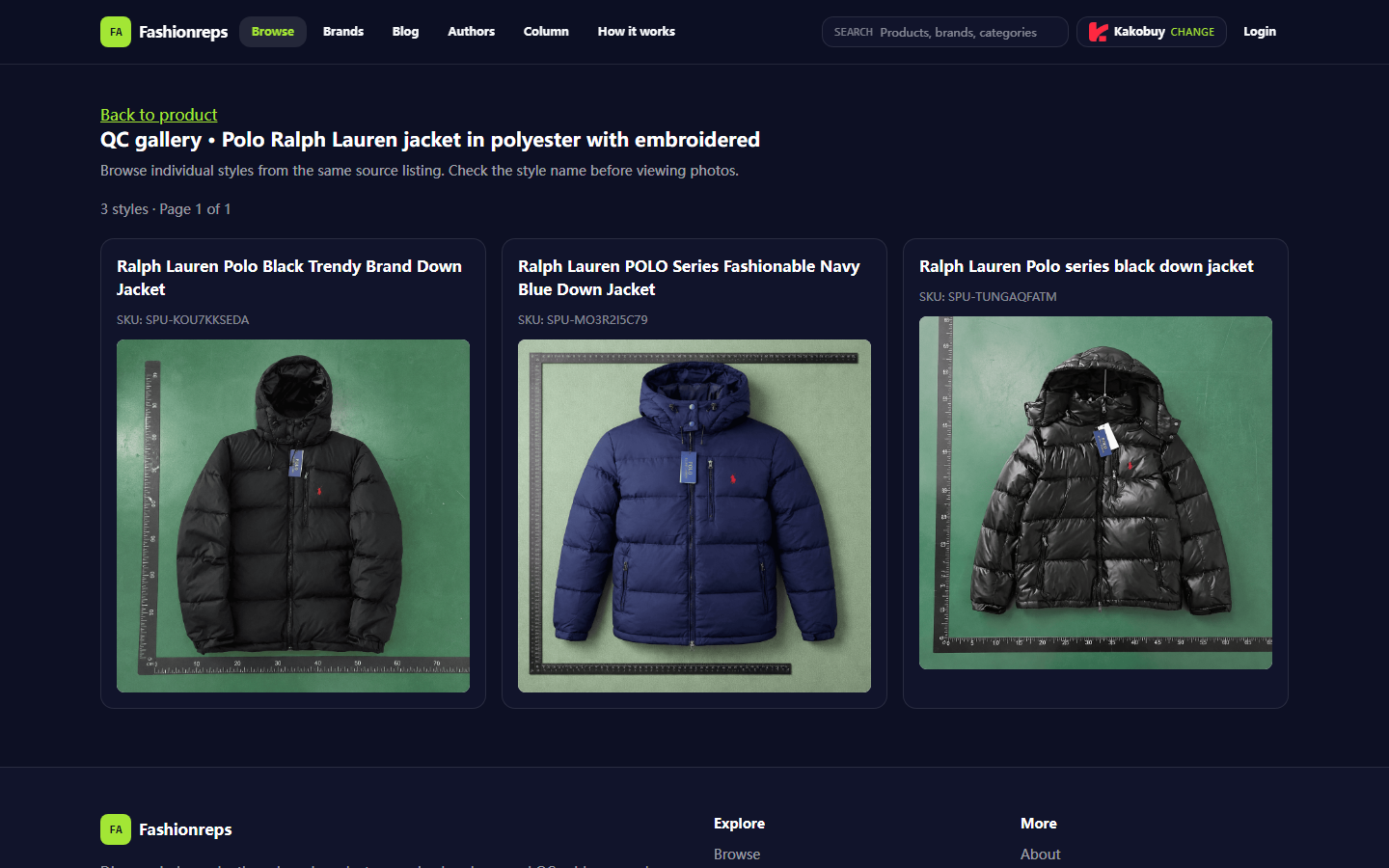
Among the Fashionreps materials verifiable this time, the sample that can be directly opened and displayed with QC content is the Polo Ralph Lauren polyester embroidered jacket page, not a knitwear page that has already completed information verification. Therefore, conclusions about fabric, fit, or images from that page cannot be directly applied to knitwear.

Image: A sample of Polo Ralph Lauren related product on a Fashionreps visible QC page. This image is used to illustrate the page verification boundary and is not evidence of knitwear material, sizing, or wearing effect.
Visible page information shows that multiple styles may exist under the same source product, and the page requires confirming the style name first before viewing corresponding images. This step is especially important for knitwear because under the same brand keyword, crew neck, half-zip, cardigan, knitted polo collar, and different seasonal thickness styles may appear simultaneously. Looking only at the brand and knitwear keyword in the title cannot confirm whether the image you see corresponds to the target style.
Currently, you should not infer the following facts from the provided sample:
- Specific selling price, inventory, and available colors of the knitwear
- Exact material such as wool, cotton, acrylic, or blends
- Actual elasticity of collar, cuffs, and hem
- Existence of a complete size chart or genuine user feedback
- Whether the item is suitable for machine washing, drying, or long-term workwear use
Before publishing, you should reopen the specific knitwear product page and check the page date, product name, size chart, visible images, and available QC records. Price, inventory, agent fees, shipping routes, and return/exchange conditions are time-sensitive information and cannot be confirmed solely from old screenshots or titles. The verification date is October 9, 2026; if the page changes at the time of ordering, the ordering page should prevail.
How to Read Collar Type, Length, Cuffs, and Fit Information
The workwear suitability of a knit sweater is usually determined by four dimensions and structures: collar type, length, sleeve length, and cuffs. When page information is incomplete, prioritize recording measurable data rather than relying on vague adjectives like slim, loose, or premium.
Collar Type
Crew necks suit pairing with shirts that have a relatively closed collar and easily form a clean two-layer structure with light jackets. V-necks require observing the depth of the neckline: too shallow may not reveal the shirt collar, too deep may make the tie or inner layer proportion look abrupt. Knitted polo collars and half-zip styles require extra confirmation of collar height, zipper length, and thickness when fully closed.
If the page only has front-facing images, require yourself to confirm at least three points: whether the neckline lies flat, whether the neckline is symmetrical with the shoulder line, and whether there is enough space for the inner collar to show. A single flat-lay image cannot prove that the collar won't deform when worn.
Length
When layering for work, length should be judged together with the inner shirt and outer jacket. Too short may expose too much of the shirt hem, too long may bunch under the jacket. Don't just look at model proportions; compare the garment length with one of your existing well-fitting knit sweaters.
Recommended data to record:
- Shoulder width
- Chest or half-chest measurement
- Garment length
- Sleeve length
- Hem width
If the page only provides height and weight recommendations without flat measurements, the information is insufficient to support precise size selection. Height and weight recommendations can serve as screening clues but cannot replace actual measurements.
Cuffs and Hem
Cuffs that are too tight affect cuff exposure of the shirt and may cause pressure during long office hours; cuffs that are too loose easily bunch out from jacket sleeves. If the hem ribbing is pronounced, it may create horizontal wrinkles at the waist. Images can help judge structure but cannot prove elasticity, recovery, or post-wash changes.
Selection Logic for Layering with Shirts, Jackets, and Trousers in Fall/Winter
Choose knitwear based on wearing order first, not based on product title. Break down workwear outfits into inner, middle, and outer layers: the shirt is responsible for collar and formality, the knitwear for warmth and color transition, and the jacket or coat for wind protection and overall silhouette.
Layering with Shirts
If you often wear Oxford or thicker business shirts, the knitwear chest and armholes need to leave room. For crew necks, focus on collar exposure ratio; for V-necks, focus on whether the collar points will be pressed by the knit edge. Thin knits are better placed inside fitted suits or short jackets, while thick knits require first confirming the outer jacket's chest and sleeve space.
Layering with Jackets
When pairing with short jackets, keep length difference as controllable as possible. If the knitwear is noticeably longer than the jacket, the exposed hem becomes a major visual element; if that's not your intention, prioritize lengths close to the jacket hem. With relaxed work jackets, more room is acceptable, but cuffs and shoulder lines should still avoid excessive stacking.
Layering with Trousers
Maintain clear contrast in shade or material between knitwear color and trousers. With dark knitwear and dark trousers, add layers through shirt collar, belt, shoe surface, or jacket material; with light knitwear and dark trousers, check if the hem appears too bulky. Styling logic cannot replace size verification, and color coordination cannot remedy overly long sleeves or inappropriate shoulder width. 🧶
What to Check for Work and Weekend Scenarios Separately
Work scenarios place more emphasis on neatness, repeatability of outfits, and long-term comfort. Before ordering, focus on whether the collar is neat, whether the hem rolls easily, whether cuffs affect shirt cuffs, and whether the product has sufficient care instructions. If the page lacks care information, don't assume it can be machine washed or dried.
Weekend scenarios usually allow more relaxed silhouettes and more pronounced patterns, but still need to check length, shoulder width, and outer layer space. Relaxed does not mean bigger is better; if shoulder lines droop, sleeves are too long, or the hem bunches, the actual effect may turn from casual to sloppy.
A simple selection method is to first determine your most frequently worn outerwear, then use its chest, sleeve width, and length to derive the acceptable range for the knitwear. If you don't have a reference garment, at least measure one knit sweater you are satisfied with as a flat measurement reference. 📏
How to Record Product Specs, Image Clues, and User Feedback in Layers
Different information has different credibility. It's recommended to divide product information into three layers instead of writing image impressions directly as facts.
Information Layer What You Can Record What You Should Not Directly Infer Explicit page text Product name, style name, size options, seller-filled material or dimensions That text is always accurate or applies to all batches Visible images and QC Color, appearance structure, label position, obvious flaws, flat measurement images Hand feel, weight, warmth, post-wash changes User feedback Recurring size issues, shipping issues, or workmanship issues A single comment represents all buyers, or comments still apply to current batch Use descriptive language for image clues, such as "in the photo, whether the collar edge lies flat" or "flat-lay image shows sleeve length data." Avoid writing "fabric is soft," "comfortable to wear," or "quality is good," because these judgments require actual touch, wear, or sufficient verifiable evidence.
For user feedback, record the comment date, quantity, whether it targets the same style, and whether issues recur. When there are no complete reviews or the page only shows selected feedback, at most say "feedback information is limited" and cannot summarize limited comments into general conclusions.
Possible Size Risks, Information Gaps, and Pre-Return/Exchange Checks
Common knitwear risks include different fits under the same name, missing size charts, flat measurements inconsistent with recommended weight, color batch differences, inability to judge collar elasticity, and unclear style correspondence in images. In these situations, the safest approach is not to size up or down based on experience, but to pause ordering and complete the information.
When ordering through a shopping agent, first confirm:
- Whether the product title and specific style in the order match
- Whether color, size, and quantity match the page selection
- What appearance information the QC service will check after the item arrives at the warehouse
- Whether return/exchange can be requested within the specified window
- Whether return/exchange is restricted by removing tags, packaging, or special item conditions
- How international shipping, customs fees, and storage periods are calculated
Existing information shows that Kakobuy's fees typically consist of product cost, domestic China shipping, international shipping, and possible customs fees; international shipping depends on weight, route, and destination. Information also shows that some items can apply for 5-day no-reason return/exchange within 120 hours after warehousing, but special items and those where removal of packaging, tags, or accessories has been requested may not apply. The above is provided agent information; before actually ordering, you must reconfirm on the current page and cannot treat it as a unified policy for Fashionreps or all agents.
QC mainly helps verify style, quantity, color, size, model, and obvious appearance condition. It cannot prove knit fiber composition, long-term durability, warmth, or brand authenticity. After receiving QC images, first confirm the style, then check collar, cuffs, hem, obvious stains, damage, and size records. If information gaps are found, consult within the return/exchange window; do not request removal of tags or packaging first. 🔍
Pre-Order Action Checklist for polo ralph lauren Knitwear
Before ordering, complete the following checks in order:
- Confirm the page shows knitwear, not a jacket, down coat, or other outerwear under the same brand keyword.
- Confirm the specific style name and save product images corresponding to that style.
- Record shoulder width, chest, length, and sleeve length from the size chart; mark as information gap if no data.
- Perform flat measurement on an existing well-fitting knit sweater; don't replace actual dimensions with height/weight recommendations.
- Based on most frequently worn shirts and jackets, judge whether collar, sleeve width, and length have layering space.
- Distinguish page text, QC images, and user feedback; don't write image impressions as conclusions about material or comfort.
- Check destination country, currency, product price, domestic China shipping, international shipping, and possible customs fees.
- Confirm inspection scope, return/exchange time, packaging removal restrictions, and storage period.
- After QC arrives at warehouse, first check style, color, size, quantity, and obvious appearance issues, then decide whether to consolidate or ship.
- Hold off on purchasing items without sufficient specifications and corresponding images; wait for page updates or confirm with the agent.
The value of this verification method is not to guarantee every knit sweater meets expectations, but to identify unconfirmable parts in advance. Workwear buyers should prioritize pages with complete size information, clear style correspondence, and easy inspection; weekend buyers can accept more relaxed styling boundaries but should not give up verification of shoulder width, length, and return/exchange conditions. If the page still cannot confirm collar type, size, and specific style, holding off is usually safer than bearing international return/exchange costs.
Community feedback
0 approved
- Readers
- No approved comments yet.
Keep reading on this site
Rick Owens Shoe QC: Sole, Heel and Size Checks / Loewe Scarf Shipping Fees and Next Steps When Status Changes / Kailas Jacket: Check Shipping Weight