Rick Owens Shoe QC: Sole, Heel and Size Checks
-
Find your place
## Set Clear QC Verification Goals and Evidence Boundaries for Rick Owens Shoes This guide focuses on a pair of black high-top canvas [sneakers](https://fashion-reps.net/shoes), explaining how to use real QC photos to check the sole edge, heel height, upper markings, size tag, stitching, and visible flaws. The goal is not to authenticate or guarantee durability, but to catch any mismatch in style, color, size, or workmanship before shipment. The item under review is the [Rick Owens](https://fash
Editor score 4.2 / 5
Set Clear QC Verification Goals and Evidence Boundaries for Rick Owens Shoes
This guide focuses on a pair of black high-top canvas sneakers, explaining how to use real QC photos to check the sole edge, heel height, upper markings, size tag, stitching, and visible flaws. The goal is not to authenticate or guarantee durability, but to catch any mismatch in style, color, size, or workmanship before shipment.
The item under review is the Rick Owens Black High-Top Sneakers in Canvas — Ramones-Style Silhouette, Round Toe and Flat Sole from the fashion-reps product detail page. According to the page, this is a black high-top round-toe shoe with a canvas upper, rubber sole, and textile insole, priced at $63.43 as a reference, with sizes listed as women's 36–43 and men's 38–47. The product information was last updated on September 26, 2026, and the final item price, service fees, and international shipping costs still need to be confirmed on the shopping agent's page.
Photos can help buyers verify appearance, structure, and labels, but they cannot prove comfort, durability, or authenticity. Feel, actual weight, smell, internal bonding strength, and long-term wear cannot be confirmed from QC photos alone. 🧐
Confirm Style, Color, and Size from the fashion-reps Product Detail Page
Start by opening the specific product detail page, not judging from images on the homepage, brand page, category page, or search results. First, verify the following:
- Is the item a black high-top canvas sneaker, not a low-top, other material, or similar colorway?
- Does the toe have the round-toe silhouette described on the page?
- Is the sole a flat rubber structure, and does the overall shape match the style shown on the product page?
- Is the size selected in the order within the size range listed for the item?
- Does the product page clearly show the corresponding style, not other shoes from the same brand?
According to the page, this shoe belongs to a Rick Owens Ramones-style high-top silhouette. The term "style" here only describes the appearance direction shown on the page; it does not indicate authenticity or constitute brand certification.
If the color, size, or style name in the order record does not match the product detail page, pause further judgment, save screenshots of both the order page and the product detail page, and contact the shopping agent for confirmation. Do not proceed with acceptance based solely on similar sole color or shaft height.
Access the Real QC Photo Gallery for This Item via View QC Photos
After confirming the product detail page, use the View QC Photos button on the page to enter the QC gallery for that specific item. Do not manually guess image URLs, and do not use product main images, brand page images, or other items' images as QC evidence.
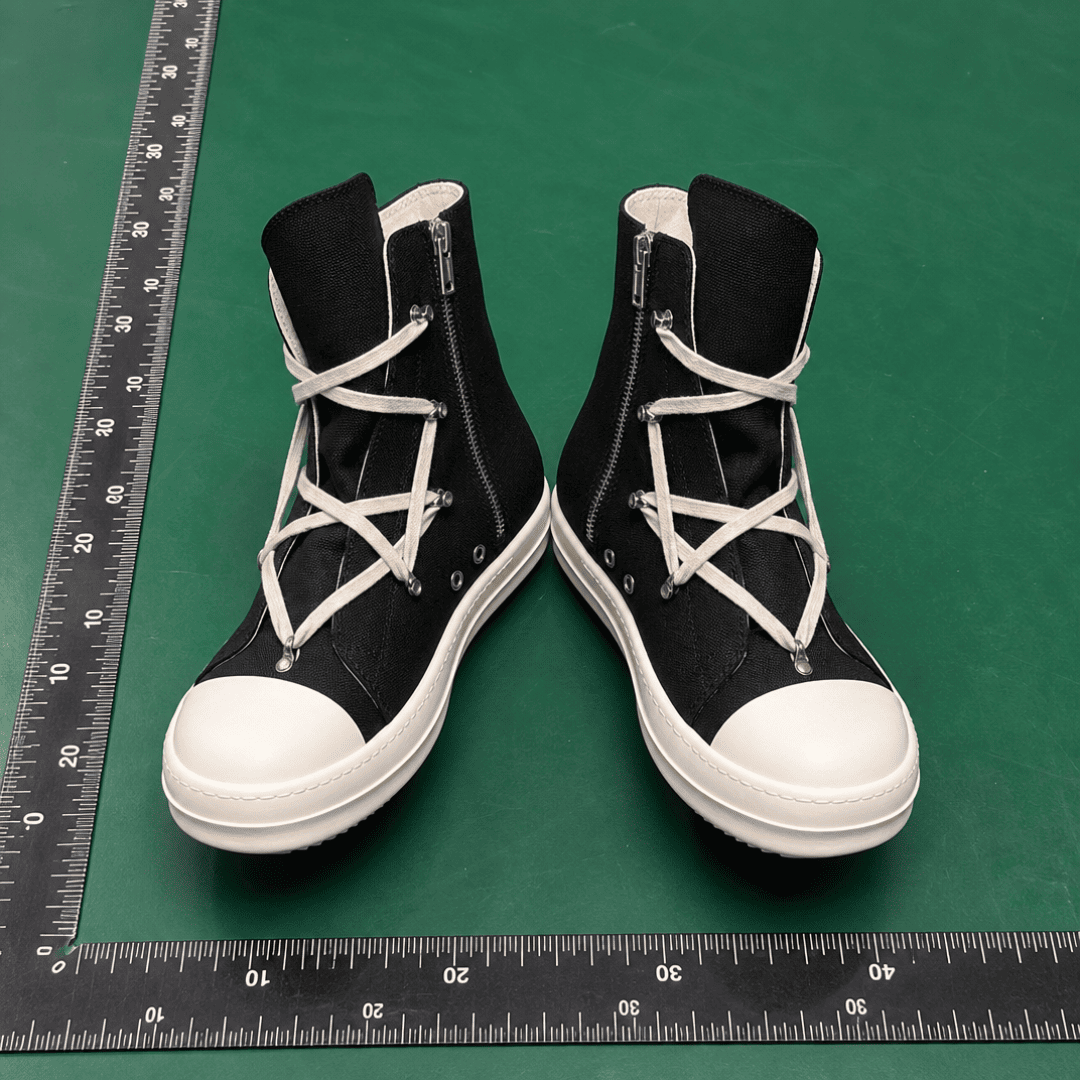
The designated image available for this review is shown below. It corresponds to the QC product record for the black high-top canvas sneakers described above:

When viewing photos, first confirm that the shoe style matches your order, then inspect in a fixed sequence. It's recommended to zoom in on the left and right shoes, soles, heels, and labels separately, and record "what is seen" and "what cannot be confirmed yet."
If the gallery does not have enough photos to cover the sole edge, heel, or size tag, do not supplement with product main images. You can request additional photos from the agent, asking them to shoot directly for your current order and item.
Verify Sole Edge, Heel Height, and Overall Silhouette
The sole edge is a key focus. Observe the connection between the upper and the rubber sole, checking for any visible gaps, local lifting, uneven glue lines, or continuity abnormalities. Slight shadows in photos do not necessarily indicate separation; you need to confirm from different angles.
Check in this order:
- Is the front edge of the toe roughly symmetrical left and right?
- Are there visible gaps, lifting, or obvious glue overflow along the sole edge?
- Does the seam line between upper and sole differ noticeably between left and right shoes?
- Do the sole tread pattern and outer edge width match the structure shown on the product detail page?
- Are heel height, heel counter wrapping, and sole thickness similar between left and right shoes?
Page information and buyer discussions mention that some Rick Owens high-top styles have reports of sole separation and faster heel wear. These are risk warnings from public discussions, not test conclusions for this specific pair. QC photos can at most help spot visible edge problems; they cannot predict wear rate after long-term use.
For overall silhouette, observe toe height, shaft tilt direction, tongue position, and the standing posture of both shoes. If one shoe appears collapsed, toe heights differ, or heel tilts, request additional flat-lay and side photos. 👟
Check Upper Markings, Tongue Labels, and Size Tag
Size tag checks should be based on the order size and the size range on the product page. Don't just look at numbers on the shoebox or tag; also confirm whether the tag belongs to this pair, is legible, and whether left/right information corresponds.
Key points to verify:
- Does the size on the tongue label match your order selection?
- Is the text, numbers, and print position on the tag clear, without obvious misalignment or illegible areas?
- Do the left and right shoe labels show consistent sizing systems?
- Do upper markings, tongue position, and stitching match the product images for this style?
- Is the side zipper position consistent with the structure shown on the page?
Public QC discussions specifically remind to check the position of the side zipper end, loose threads, irregular holes, and toe height. These are items to watch in photo inspection, but one detail alone cannot determine authenticity.
If the size tag shows 42 but your order record says 41, treat it as an order or picking error first; do not assume "the shoe runs large so it's acceptable." Page information shows mixed buyer opinions on sizing: some find it large and choose half or full size down, others choose true to size, and wide-foot buyers may need more room. Thus, the size tag in photos only confirms label information; it cannot replace measurements of foot length, foot width, and insole length.
Inspect Stitching, Glue Edges, and Visible Surface Flaws in Photos
When zooming in on QC photos, check structural issues first, then cosmetic details. Structural issues include sole edge openings, obvious deformation, severe misalignment, and noticeable size differences between the two shoes; cosmetic details include loose threads, glue marks, dents, stains, and slight color differences.
You can use the following recording method:
Check Item Evidence Confirmable in Photos Needs Additional Photos or Physical Confirmation Sole edge Obvious lifting, gaps, glue overflow, or left-right differences Internal bonding strength and long-term durability Heel and silhouette Obvious inconsistencies in heel height, standing posture, and toe shape Support, comfort, and deformation rate when worn Stitching and upper Obvious broken threads, loose threads, misalignment, or visible stains Internal stitching quality and areas not photographed Size tag and markings Label text, size, and position match order and style Actual insole length, width fit, and authenticity Whether minor glue marks or loose threads are acceptable depends on the platform's return/exchange policy, the location of the issue, and the buyer's tolerance. Flaws at sole edges, zipper connection areas, or clear asymmetry between left and right usually deserve priority over single-point glue marks that don't affect structure.
Do not mistake reflections, compression noise, or shadows in photos for stains, cracks, or separation. Request natural light photos from front, side, and close-up angles, and if necessary, have the agent shoot with the same order number or item identifier to avoid mixing orders.
Separate Photo-Visible Evidence, Editorial Judgment, and Unconfirmable Feel or Authenticity
Photo-visible evidence includes: approximate upper color, obvious openings along the sole edge, heel silhouette, label text legibility, obvious stitching breaks, and surface stains or deformation visible to the naked eye.
Editorial judgment can only be built on this visible evidence. For example, if toe heights differ significantly between left and right, you can conclude "the photos show a shape difference"; you cannot assert that the shoes are uncomfortable or defective.
The following cannot be confirmed from current QC photos alone:
- Authenticity or brand certification.
- Actual canvas feel, in-shoe comfort, and foot support.
- Durability of the sole after multiple wears.
- Whether the insole length truly fits a specific foot length or width.
- Flaws in areas not photographed.
- Compliance with brand, import, or intellectual property requirements in the destination country.
A safer approach is to categorize conclusions into three types: acceptable, needs additional photos, or should pause shipment. This avoids treating blurry photos as quality assurance and avoids making return decisions based on an unjudgeable shadow. ⚠️
Checklist for Additional Photos, Returns, and Pausing Shipment When Style or Size Mismatch Is Found
If a style or size mismatch is found, pause shipment first; do not confirm receipt or submit consolidation. Follow this order:
- Save the style, color, and size information from the product detail page.
- Save the actual selection and item number from the order record.
- Mark the specific left/right shoe, location, and issue type in QC photos.
- Request additional photos for the corresponding order through the shopping agent.
- Ask for photos of sole edge, heel, tongue label, size tag, side zipper, and suspected flaw areas.
- Check the platform's return/exchange window, fees for additional photos, and return conditions.
- Pause consolidation, shipment, and final confirmation until issues are explained or resolved.
If after additional photos you still cannot confirm size or style, prioritize return or exchange over relying on assumptions like "this style usually runs large" or "the flaw might be minor." If the issue is just minor loose threads or local glue marks, decide based on flaw location, item price, return costs, and personal acceptance.
The reference price in this item's information is $63.43, but final costs also include shopping agent service fees, international shipping, possible taxes, and return/exchange expenses. Any return or exchange decision should be based on the current agent page and applicable rules in the destination country, not accepting unconfirmable sizing or obvious structural problems just to save fixed fees.
After completing QC inspection, buyers should keep the product detail page, order information, original QC photos, additional photo records, and agent replies. This way, when applying for returns or explaining shipment decisions, you can clearly distinguish page facts, photo evidence, and personal judgment.
Community feedback
0 approved
- Readers
- No approved comments yet.
Keep reading on this site
Loewe Scarf Shipping Fees and Next Steps When Status Changes / Kailas Jacket: Check Shipping Weight / Tom Ford Fragrance: Verify Notes, Size, and Usage