Winter Streetwear Flat Lay: Jackets, Sweats & Details
-
Find your place
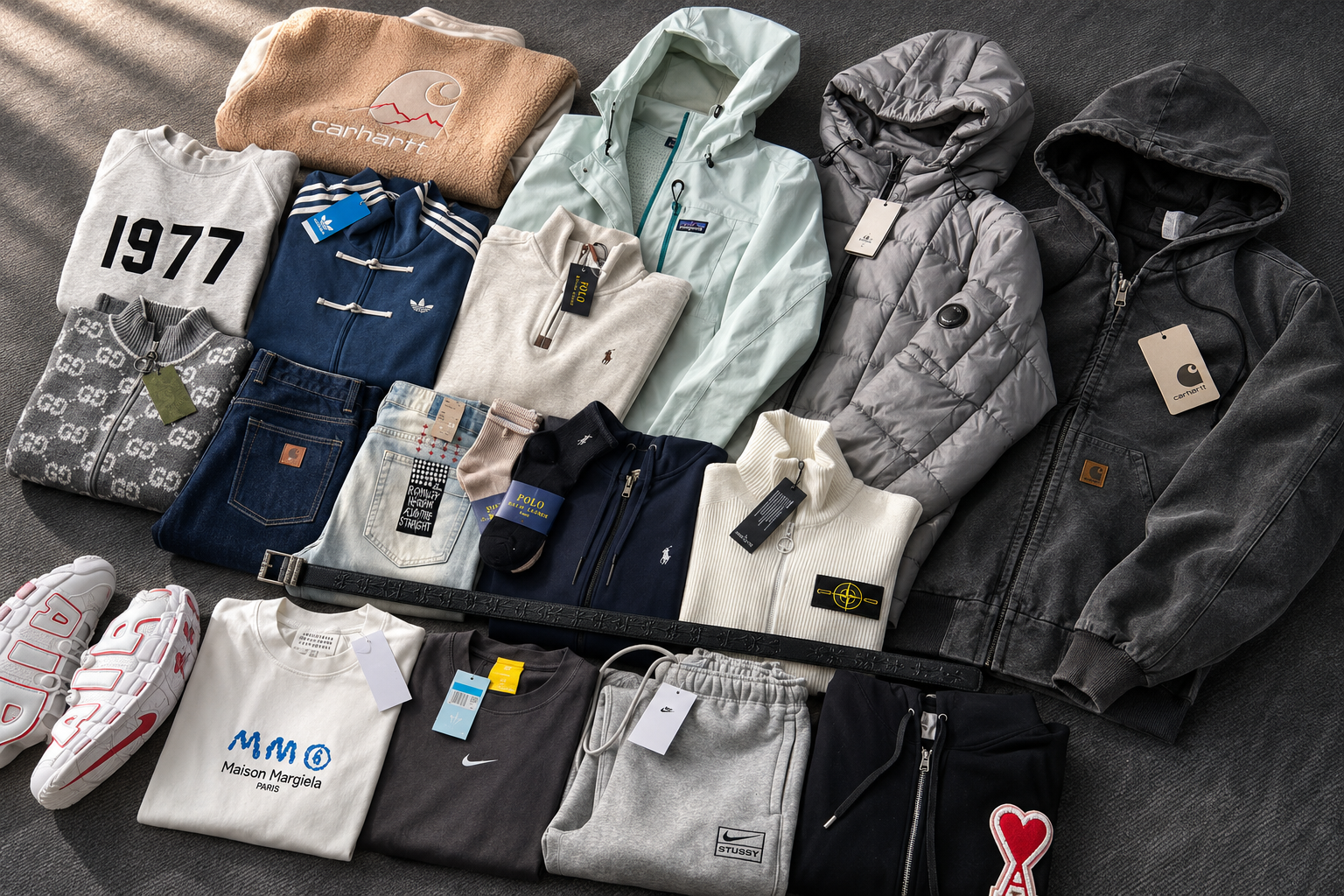
Winter street style isn't just about layering heavy outerwear—it's about using the tonal relationships among black, gray, white, navy, and lighter shades to keep different materials and silhouettes distinct within a single outfit. Using this flat lay as a reference, let's break down the color palette, styling, and outfit combinations. 
Editor score 4.2 / 5
Winter street style isn't just about layering heavy outerwear—it's about using the tonal relationships among black, gray, white, navy, and lighter shades to keep different materials and silhouettes distinct within a single outfit. Using this flat lay as a reference, let's break down the color palette, styling, and outfit combinations.
Color Palette: Build a Stable Foundation with Neutrals
The main colors in the image are black, gray, white, and navy, creating a restrained overall look that suits casual winter street style. A black hooded jacket, dark jeans, and black joggers serve as base colors; a gray puffer jacket, hoodie, and joggers add light-and-dark variation to the dark pieces; a white knit sweater, light hoodie, and light windbreaker help brighten the composition.
If you want easier control over your outfit, try the "three-layer color method":
- Start with black, dark gray, or navy to set the tone for outerwear and bottoms.
- Add light gray, off-white, or white as a mid-layer to avoid an overly dark look.
- Finish with a light green jacket, blue pieces, or red shoe details as small visual accents.
The red shoe stripes, blue athletic-inspired pieces, and light green jacket in the image are all accent colors that are small in area but high in recognition. When using these colors, keep the rest of your clothes low in saturation to avoid multiple bright color blocks competing for attention.
Styling: First Define the Main Silhouettes, Then Arrange the Details
This flat lay distributes outerwear, tops, bottoms, and accessories across different areas. The larger outerwear pieces are placed at the top and right, hoodies, knitwear, and athletic tops are concentrated in the middle, and jeans, joggers, shoes, and belts are arranged at the bottom. This arrangement lets viewers first notice the seasonally appropriate outer layers, then gradually discover the inner layers and accessories.
When creating a similar layout, follow this order:
- Start by placing larger pieces like a puffer jacket, fleece jacket, or windbreaker to define the composition's boundaries.
- Put hoodies, knitwear, and zip-up tops in the middle, using collars, zippers, drawstrings, and ribbed cuffs to create detailed layers.
- Place jeans, joggers, or other bottoms at the bottom to balance the visual weight of the upper half.
- Finally, add sneakers, socks, belts, and items with embroidery or patches as details for close inspection.
- Hang tags can remain in the frame, but don't let multiple tags cluster and obscure the clothing.
When folding clothes, try to leave part of the collar, cuffs, pockets, zippers, or prominent decorations visible. This keeps the layout tidy while helping viewers distinguish the design language of different pieces. Thick outerwear shouldn't be stacked entirely on top of other garments, or the bottom pieces will lose their outlines.
Outfit Combinations: Build Winter Layers from Light to Heavy
Light Inner Layers with Dark Outer Layers
A white or off-white knit sweater or a light hoodie can serve as an inner layer, paired with a black hooded jacket, dark gray jacket, or navy coat. When the light inner layer peeks out from the collar and hem, it breaks up the heaviness of the dark outer layer; if the outer layer has prominent zippers, drawstrings, or pocket structures, keep the inner layer relatively simple.
Gray Pieces Connect Black and White
A gray hoodie, gray puffer jacket, and gray joggers can act as transitional colors. A black jacket with gray bottoms leans more sporty-casual; a gray jacket with a white knit sweater or light top creates a softer look. To keep gray layers from becoming monotonous, differentiate pieces through texture—for example, combine quilting, knit texture, smooth cotton, and denim in one outfit.
Navy Connects Tops and Jeans
A navy zip-up, athletic top, or socks can form a continuous color block with dark blue jeans, but the two should retain a difference in brightness or material. If the top and pants are close in color, add white shoes, a light gray inner layer, or light accessories to prevent the upper and lower halves from blending together.
Keep Only One Accent Color
A light green windbreaker already has strong visual presence, so pair it with black, white, or dark gray as support. Sneakers with red details can also be the focal point, but avoid adding large areas of bright red on the upper body. If you choose a blue athletic piece as the focus, keep other colors within the gray, white, and navy range.
Details to Consider When Choosing Outfits
The image clearly shows some garments' colors, silhouettes, quilting, zippers, drawstrings, ribbed cuffs, embroidery, and patches, but many pieces are folded or partially obscured. When using this flat lay as a styling reference, pay attention to the following:
- Shoulder lines, length, and back silhouette of outerwear when unfolded.
- Whether the collar, cuffs, and hem of knitwear or hoodies are suitable for layering.
- Whether the cut of jeans and joggers balances the length of outerwear.
- Whether shoe details will echo the accent colors on the upper body in an actual outfit.
- Whether belt and sock colors add too many visual focal points.
- Material, size, and care instructions in product specifications to determine appropriate seasonal layering.
This flat lay is best used as a reference for color relationships, garment categorization, and layout order. Since some garments are not fully unfolded, you cannot judge material composition, warmth, comfort, fit, durability, or post-wash performance based solely on the image.
Community feedback
0 approved
- Readers
- No approved comments yet.
Keep reading on this site
Black Drawstring Athletic Shorts: Color & Styling Tips / Supreme, Polo, Carhartt Winter Flat-Lay: Color & Styling / Black Running Tee: Fit, Color, and Styling