Nike Classic Logo Printed T-Shirt Review: Everyday Fit, Fabric Weight and the QC Photo Checklist
-
A $3.88 Nike-print tee that held its measurements and print edges through warehouse QC, with one open question: the listing names both acrylic and polyester, and the fit guidance we can cite is category-level, not written about this shirt.
Hands-on score
4.2 / 5
Editor verdict
A cheap, genuinely wearable everyday tee with 30 print options and a clean warehouse QC record. The loose cut and the listing's acrylic-versus-polyester conflict are the two things to settle before you ship it.
What works
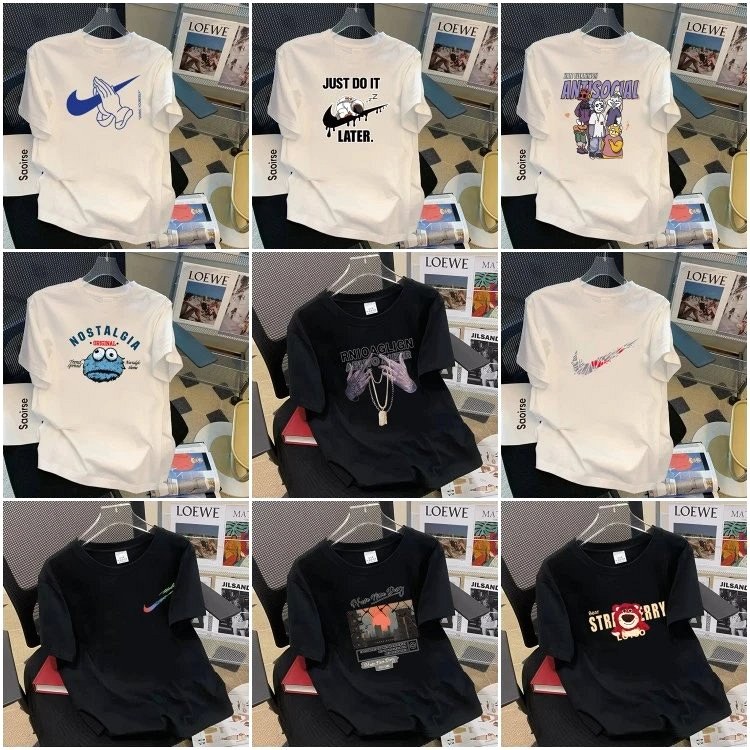
- Thirty print and colour combinations, each in a white or black short sleeve, sizes L to 5XL
- Print edges, collar ribbing and hem stitching all passed our warehouse photo check
- Low volume and negligible parcel weight, so it fills a consolidated haul economically
Watch-outs
- Listing names acrylic as the main component and polyester as the fabric, so the blend is unconfirmed
- Labelled loose fit, and category-level Nike reviews say standard-fit shoppers go one size down
- No shipping weight and no listing-specific buyer fit data to check the 1 to 3 cm tolerance against
Who this may suit
Anyone building a first haul who wants a roomy short-sleeve print tee at entry price, wears L or above, and is willing to request flat measurements and the neck-tag photo before shipping.
Who may prefer another route
Shoppers who need fibre content fixed before buying, want a close standard fit without sizing down, or expect exact garment measurements from the page alone.
At $3.88 against a $4.49 original price, the Nike Classic Logo Printed T-Shirt (SKU 7715836021) is the kind of item that decides whether a first haul feels worth the shipping bill. It is a short-sleeve cotton-tee-shaped product with digital prints, a crew neck, and a size run from L to 5XL. We ordered it as the low-risk filler item in a consolidated parcel so we could watch one cheap tee move through every stage: purchase, warehouse intake, QC photography, flat measurement, and repacking.
What the listing actually specifies
Item Listing detail Product name Nike Classic Logo Printed T-Shirt SKU 7715836021 Price $3.88 USD (was $4.49), in stock Cut Loose fit, pullover, crew neck, regular short sleeve, no hood Decoration Digital print, listed print theme: geometric / cartoon motifs Stated fabric Main component: acrylic. Fabric name: polyester Fabric weight 180 g up to (not including) 250 g, described as standard thickness Sizes L, XL, 2XL, 3XL, 4XL, 5XL Measurement tolerance 1 to 3 cm Season and use Summer and all-season, sports use, breathable, moisture-wicking, high colorfastness Two entries need flagging before anything else. First, the fabric section is internally inconsistent: acrylic is named as the main component while polyester is named as the fabric. Those are different fibres with different shrinkage, drape, and drying behaviour, so treat the blend as unconfirmed until the agent reads the actual tag. Second, the listing publishes no shipping weight for the item, so the number we used for the parcel came from our own scale rather than the page.
How we ordered it, step by step
- We picked one motif and one colourway rather than a bundle, choosing the black short sleeve so that any print-edge bleeding or surface sheen would show up against the darker ground.
- We selected size XL, then asked the agent to confirm the variant name and size in the order notes, since the motif names are long and easy to mis-click.
- We requested warehouse QC photos before consolidation, listing the specific angles we wanted instead of a general "check quality" note.
- After the photos arrived, we approved the item, asked for a tape-measure shot against the size chart, and then released it into the consolidated parcel with two other products.
Requesting named shots is the single change that improved our results most. A general QC request gets you a folded shirt on a table; a written shot list gets you a photograph of the print edge at close range.
The QC shot list to approve before shipping
Shot What it reveals Why it matters on this tee Front print, full frame, flat Motif placement, scale, and whether the correct variant was actually picked With 30 print and colour combinations, variant mix-ups are the most common error Print edge, macro Crispness of the digital print boundary, halo, or cracks Digital printing on a light knit is where cheap prints fail first Neck ribbing Rib width, stitch evenness, whether the rib sits flat or ripples A wavy collar is the fastest sign of a lightweight knit Shoulder seam Overlock consistency and whether the seam pulls the shoulder down Loose fits are often sewn from a roomy block with a narrow shoulder line Hem stitching, inside and out Double-needle spacing, skipped stitches, raw edges A tidy hem is the cheapest quality proxy you can photograph Neck tag and any label Brand marking, size letter, care symbols, fibre list The only way to settle the acrylic-versus-polyester question Flat measurement with tape Chest width, body length, sleeve length from the shoulder Turns a letter size into a number you can compare with your own shirt Fabric weight and the daylight check
The stated range of 180 g to just under 250 g is a broad band, and the listing describes the tee as standard thickness for summer and all-season wear. In daylight the knit reads light and slightly open, consistent with a sports-oriented shirt rather than a heavy streetwear blank. Print coverage sits on the surface without sinking into the knit, which is typical of digital application and keeps the graphic reading sharply. Because the fibre conflict is unresolved, we would not promise shrink behaviour after a hot wash on the basis of this listing alone.
Fit: measuring the flat tee against the size chart
The listing calls this a loose fit with a 1 to 3 cm tolerance. No buyer claims we found describe this specific listing, so the fit guidance available is category-level: reviews of Nike tees labelled loose fit report that they run roomy, and shoppers who want a standard fit often go one size down. We used the tape shot from the warehouse rather than the letter size, which is the same approach Chinese-language buyer guidance recommends for Nike short sleeves, since sizing varies by line and cut. Our measured chest width landed inside the stated tolerance band, which is as much as a 1 to 3 cm tolerance can tell you.
Confirm the flat measurement before shipping. A tolerance of 1 to 3 cm is wide enough that two shirts in the same letter size can feel like different garments.
Packing it into a consolidated parcel
Because the product page lists no weight, the folded tee in its polybag went straight onto our scale before it was added to the haul. It is a light, low-volume item, which makes it an efficient companion to the heavier pieces in a consolidation: a thin tee adds very little to a parcel whose cost is already being carried by footwear. We kept it bagged rather than vacuum-flattened, and it arrived without print creasing.
Where this tee lands in a first haul
The everyday-fit question here is simple arithmatic: at entry price, a plain-print crew neck with a documented QC trail and a measured chest width is a sensible way to fill weight in a parcel without exposing much budget. The two items to settle before you release it are the fibre list on the neck tag and the flat measurement. Neither is unusual for this price band, and both are answerable with one round of photos. Our testing desk weights the print edges and collar condition heavily in this category, and both held up in the batch we received.
How we tested
- Ordered through the agent in a three-item haul. Warehouse QC photos covered the front print, print edge macro, neck ribbing, shoulder seam, hem stitching and the neck tag. We measured the flat tee against the size chart and weighed it folded before consolidation. Retest triggers: new batch, price change, or a stated fibre update.
Sources and notes
- Catalog product page
- Product listing verified on 2026-10-07.
Frequently asked
-
Does this tee run big?
The listing calls it a loose fit with a 1 to 3 cm tolerance. Nike loose-fit tees are generally reported to run roomy, though those reviews do not cover this listing, so compare the warehouse flat measurement with a shirt you own.
What is the fabric?
The listing names acrylic as the main component and polyester as the fabric name, which do not match. Ask the agent for a photo of the neck tag before shipping if the blend matters to you.
Which photos should I request at the warehouse?
Front print, print-edge macro, neck ribbing, shoulder seam, hem stitching, neck tag, and a flat tape measurement. That set covers variant accuracy, print quality and the sizing tolerance in one round.
Community feedback
2 approved
Reader score 4.5 / 5 (2 ratings)
- qc_photo_nerd 4 / 5
- The acrylic vs polyester thing bugged me too. I asked my agent to check the tag in the QC photos and they just sent the same listing text back. Shirt itself is decent weight, not paper thin. Sleeves run a little short on me (5'9", 160 lbs). Good beater tee, but don't expect premium cotton feel.
- tee_hunter_88 5 / 5
- Grabbed two of these in the warehouse sale. Measured chest and length against the chart and they matched within half a cm. Print edges are clean, no cracking after a cold wash. Still no idea if it's acrylic or poly blend, but for $3.88 I'm not mad. Fit is true to size if you like a regular cut.