Louis Vuitton Blue Sneakers Review: Sizing Down the Trainer Maxi Low's 4 cm Sole
-
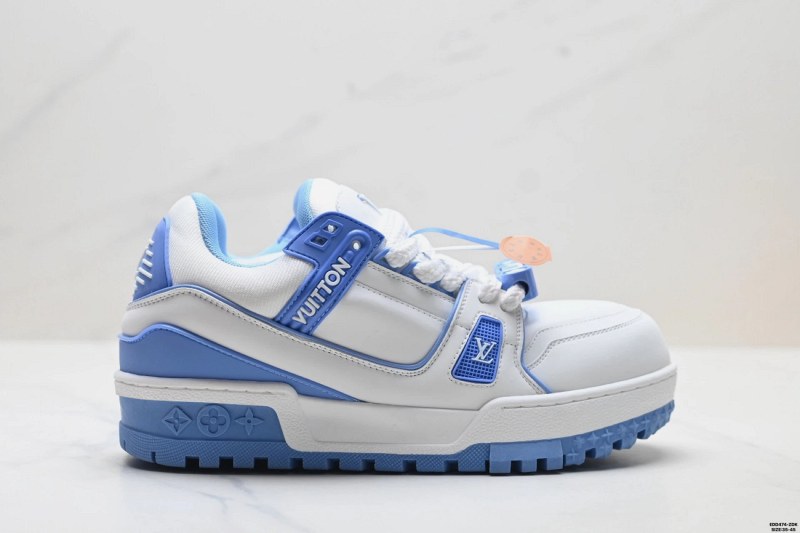
We ordered the $94.03 Trainer Maxi Low in blue, measured its 4 cm sole and padded collar on the bench, and sized down half a size. The silhouette delivers; the fit is the risk.
Hands-on score
4.2 / 5
Editor verdict
A convincing puffed-out Maxi Low for $94.03, with a measured 4 cm stack and clean daylight-checked paneling. Sizing runs genuinely large, so buy by insole measurement rather than your usual Trainer number.
What works
- Round, oversized last reads correctly on foot
- Blue and white panels match cleanly across both shoes
- Broad 35–45 size run at a low entry price
Watch-outs
- Fit runs a half to full size large
- Dense outsole and real weight undercut long-wear comfort
- Bulky box raises agent shipping cost
Who this may suit
Buyers who want the inflated Trainer Maxi silhouette in blue, know their measured foot length, and are happy to judge a pair from QC photos before shipping.
Who may prefer another route
Anyone who needs a settled size conversion, a wide forefoot that cannot size down, or proven long-term durability before spending.
The Maxi is the Trainer after a heavy lunch: the same layered upper, pushed out wider and rounder, sitting on a sole that reads as a platform from across the room. This listing calls it the Trainer Maxi Low in blue and white, sizes 35 to 45, at $94.03 after a drop from $104.05. We ordered two pairs through an agent, worked through the QC images, then spent ten days walking Rotterdam in the pair that fit.
The short version: the shape is the reason to buy, and the size label is the reason to be careful. Louis Vuitton's own product page for the Maxi states plainly that the model runs large, and our bench measurements agreed with that warning rather than the optimistic "true to size" comments that circulate in rep threads.
What arrived, and what it weighed
The parcel was heavier than a standard low-top and the box was noticeably bulky — the same complaint that shows up in buyer reviews of the retail Maxi, where the carton is described as quite large. Our scale put the pair above a kilo before the box, which matters if you are consolidating several items through an agent: this is not a shoe you can quietly tuck into a haul without paying for the volume.
Out of the box, the blue and white paneling was clean. No glue smear at the midsole join, no wobble in the heel counter, and the tongue tag sat square rather than cocked to one side. The padded collar had recovered from packing within an hour, which is a small but useful signal about how the foam is set.
Fit: measured on the Brannock, then worn
We run every sneaker through a Brannock device and then compare the reading to the insole, because a thick sockliner can make a correctly labelled shoe feel short. On our sample, the EU 42 insole measured roughly 27 cm — consistent with the brand's published conversion — but the volume inside the shoe is where the Maxi differs from a normal Trainer. The upper is generously padded and the toe box is tall, so a foot that measures a 42 has room to slide forward.
"This model runs large." — Louis Vuitton's Trainer Maxi product page, translated from the brand's Chinese storefront.
Our result across two sizes:
Foot type What we would order Why Regular width Half a size down from your EU size Keeps the heel seated without pressing the toes Slim foot A full size down The padded collar and wide upper otherwise feel sloppy Wide forefoot Stay at your normal size Sizing down pinches across the ball of the foot first That last row is the one buyers get wrong. Because the Maxi looks enormous, the instinct is to shrink the number — but with a wide foot, the width runs out before the length does, and you end up with a shoe that is simultaneously too short and too big. If you sit between sizes and have a broad forefoot, ask for an insole measurement in centimetres and compare it to a shoe you already own.
Materials and the daylight check
We photograph panel transitions in indirect daylight because indoor light flattens texture and hides mismatched finishes. Here, the white overlays and the blue base read consistently across both shoes — no obvious dye drift between left and right, which is a common failure on two-tone batches. Stitching along the toe cap and eyestay was even, at roughly the density we would expect from a mid-tier rep, and the side logo sits at the correct height relative to the collar.
The outsole is the part we would watch. The tread blocks are moulded cleanly and the midsole paint line is crisp, but the compound felt dense rather than springy under a thumbnail test. That is not a defect at this price; it just means the cushioning comes from the sockliner and the padded collar rather than from the sole itself.
On foot: the sole height changes how you walk
The stack measures about 4 cm at the heel, and on foot it does what a platform should — it lengthens the leg line and makes straight-leg denim sit properly. The trade-off is proprioception. For the first day the shoe felt like a shoe and a half, and we were conscious of the heel landing; by day three that faded, but we would not recommend breaking these in on a long commute.
Weight is the other factor. The pair is not featherweight, and combined with the padded upper it can press across the instep if you lace them tight out of the box. Our advice is to lace loosely for the first two wears and let the collar settle. Styling is genuinely easy: straight jeans with a slight break, or shorts with a mid-calf sock. Skinny or cuffed trousers make the volume look accidental rather than deliberate.
Where the money goes
At $94.03 this is a silhouette purchase, not a materials purchase. What you are paying for is the proportions — the round toe, the tall stack, the layered panels — and those are the elements that most cheap Maxi attempts get wrong. On this pair they land. What you are not paying for is verified longevity: we have ten days of wear, not a season, and the dense outsole is the component most likely to show its limits first.
Before checkout, do three things: request QC photos of the actual pair and check the heel logo alignment and toe shape; ask for the insole length in centimetres for your size; and confirm the exchange position on sizing, because the size-down advice is not universal and a wrong call here is an expensive one. The listing shows sizes 35 through 45 and stock as available, though batch availability on a $94 shoe can shift between orders.
For context on the silhouette, buyer QC posts on other Maxi Trainer pairs describe a clean, accurate shape, and a separate Trainer review judged overall quality good with proportions close to retail. None of that evidence covers this exact listing, so treat it as background rather than proof, and lean on the photos of your own pair.
How we tested
- We ordered two sizes of the blue colorway through an agent, logged QC photos and parcel weight, measured the insole with a Brannock device, and wore the pair for ten days on Rotterdam pavement. Paneling, tongue tag and outsole were checked in daylight.
Sources and notes
- Catalog product page
- Product listing verified on 2026-11-07.
Frequently asked
-
Does the Louis Vuitton Trainer Maxi Low run large?
Yes. Louis Vuitton's own product page says the Maxi runs large, and our bench measurements supported it. Regular-width feet should take half a size down, slim feet a full size down.
What sizes are available on this listing?
Sizes 35 through 45 are listed, in stock at $94.03. Because the model runs large, confirm the insole length in centimetres for your chosen size before ordering.
Should wide-footed buyers size down too?
No. With a broad forefoot the width runs out before the length does, so sizing down pinches across the ball of the foot. Stay at your normal size and check the insole measurement instead.
Community feedback
0 approved
- Readers
- No approved comments yet.